
£3 Minimum Deposit Casinos in the UK: What to Check
 Available in GB
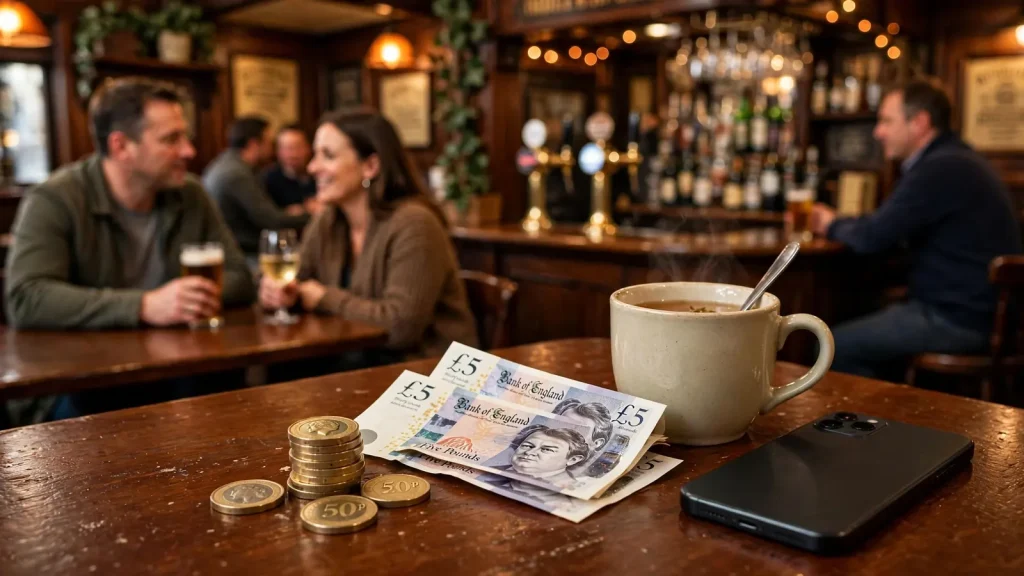
A £3 minimum is a cashier condition, and the amount accepted can differ by casino, account and payment method.
Table of Contents
- What a £3 Minimum Deposit Means in the UK Market
- Assessing Whether a Low-Deposit Casino Is a Suitable Choice
- Online Casino Deposit Limits and Payment-Method Differences
- Using a Small Deposit for Real-Money Play on Mobile
- Low Deposits, Bonuses and the 2026 Wagering Cap
- Slot Stakes and the Value of a Small Casino Balance
- PayPal and Other E-Wallet Deposits: What the Evidence Establishes
- New Casino Terms in 2026: What Can Be Confirmed
- SMS and Mobile-Billing Deposits: A Narrow Low-Deposit Option
- Features
What a £3 Minimum Deposit Means in the UK Market
A £3 minimum deposit describes the smallest amount an operator will accept through its cashier under the relevant terms. It does not mean that every UK casino accepts a deposit of that size, nor that every payment route offered by a particular casino has the same threshold. The figure is best understood as a specific cashier condition, not a market-wide standard.
The wording can also be ambiguous. A casino might accept a deposit of £3, set its cashier minimum at a different amount, or apply different terms to particular payment methods. The amount entered into a search or displayed in promotional material is not sufficient evidence by itself: the operative condition is the minimum shown in the cashier for the account and payment method being used. A deposit below that threshold may be declined or unavailable.
The UK market includes casinos with lower stated minimums. Some operators accept deposits from £1, so a £3 threshold is not the lowest documented entry point. A specialist review reported verifying six UK Gambling Commission-licensed casinos with a genuine £1 cashier minimum. That is a finding from a particular review, rather than a fixed count of all qualifying casinos: operator terms can change, and the reported figure should not be treated as a permanent market total.
A low minimum deposit can help keep your initial spend small, but check the casino’s current deposit terms before signing up. The details below provide one practical point to consider when reviewing each option.
1. Zombillion
Payout speed: 1-3 business days Zombillion lists a payout speed of 1–3 business days.
2. WinBeast
Payout speed: 1-3 business days WinBeast lists a payout speed of 1–3 business days.
3. SpinFormula
Payout speed: 1-3 business days SpinFormula lists a payout speed of 1–3 business days.
4. Revery Play
Payout speed: 1-3 business days Revery Play lists a payout speed of 1–3 business days.
5. x3bet
Payout speed: 1-3 business days x3bet lists a payout speed of 1–3 business days.
6. Dieselwin
Payout speed: 1-3 business days Dieselwin lists a payout speed of 1–3 business days.
7. NightLuck
Payout speed: 1-3 business days NightLuck lists a payout speed of 1–3 business days.
8. SlotoSport
Payout speed: 1-3 business days SlotoSport lists a payout speed of 1–3 business days.
9. NightWin
Payout speed: 1-3 business days NightWin lists a payout speed of 1–3 business days.
10. Jetsetspins
Payout speed: 1-3 business days Jetsetspins lists a payout speed of 1–3 business days.
This distinction matters because a £3 deposit can mean either that £3 is the minimum accepted transaction or simply that £3 is the amount being considered for a particular account. The cashier minimum is an operator-set condition; the amount deposited is the player’s choice only within the conditions the operator allows. A casino that accepts £1 may also accept £3, but the lower minimum does not establish that every payment method, account, or promotion is available on identical terms. Conversely, a casino whose cashier minimum is above £3 cannot be assumed to accept a smaller transaction just because low deposits are available elsewhere.
The words “minimum deposit” also do not describe how much money is available after a transaction in every practical sense. A deposit is the sum transferred into the gambling account, while the operator’s cashier rules determine whether that sum can be accepted. The available balance and the account’s use are separate matters. A small entry amount therefore indicates a low threshold for funding an account, not a promise about the experience or outcome that follows.
A low threshold may be relevant to someone seeking to limit the amount initially transferred, but it does not remove the need for a financial boundary. UK-licensed remote operators must prompt new customers to set a financial limit before their first deposit and provide account-level controls for managing limits. That safeguard is separate from the cashier minimum: the latter governs the smallest permitted transaction, whereas a financial limit concerns the amount set aside for gambling. The deposit amount should be decided within that limit, rather than treated as a reason to increase it.
Age and regulatory status are also part of the basic context. Online gambling in the UK is permitted for adults aged 18 and over at sites holding the relevant UK Gambling Commission operating licence. Operators must verify a customer’s age before allowing a deposit. A low cashier minimum does not alter those requirements or establish that a site is authorised to serve UK players.
£4 Minimum Deposit Casinos in the UK: What to Check
The figure in a site description should therefore be read narrowly. It indicates a possible entry amount only where the operator’s current cashier terms confirm it. It does not show that all UK casinos offer that threshold, that the amount can be deposited using every available method, or that a low minimum applies to every account. The same distinction applies to a £1 claim: evidence that some licensed casinos accept that amount does not make £1, £3, or any other sum a universal UK minimum.
For the phrase “£3 minimum deposit casino”, the useful point is not that a separate category of casino exists. It is that the cashier may accept a transaction of £3 where the operator’s terms allow it. The label alone cannot establish whether that amount is accepted, what conditions apply to the chosen transaction, or whether a lower threshold is available. Those details belong to the operator’s current account and cashier terms, while the broader market evidence supports only the more limited conclusion that UK minimums vary and that some licensed casinos accept deposits below £3.
Assessing Whether a Low-Deposit Casino Is a Suitable Choice
A low cashier minimum is one feature of a casino, not a measure of its overall suitability. A platform accepting a small initial payment may still have terms that make it a poor fit for a particular purpose. Assessment therefore depends on separating the stated minimum from the operator’s regulatory status, account conditions and the terms attached to any promotion.
The distinction between a cashier minimum and a qualifying deposit is especially important. The cashier minimum is the smallest amount the payment screen permits as a deposit. A promotion can impose a different threshold: a specialist casino review has reported cases where a bonus requires a £10 qualifying deposit even though the same platform accepts deposits of £5. In that situation, the smaller payment may still fund an account, but it does not meet the stated bonus condition. The offer’s own terms, rather than the lowest figure displayed in the cashier, determine eligibility.
No Minimum Deposit Casinos in the UK: What £1 Means
This difference also explains why a low minimum does not establish that a casino offers useful value. A deposit may be accepted without activating a welcome offer, and an offer may have conditions that affect how its funds can be used. A comparison based only on the smallest permitted payment can therefore conflate access to the cashier with access to a promotion. Those are separate conditions and should be evaluated separately.
Regulatory status provides a more fundamental test. Online gambling in the UK is legal only through sites holding the appropriate current UK Gambling Commission operating licence. Remote operators serving the British market must hold that licence regardless of where the company is based. A low deposit figure does not replace this requirement or indicate that the operator is authorised. The relevant question is whether the entity providing the gambling service holds a current licence for that activity, not simply whether a familiar brand name appears on a page.
A specialist casino review’s snapshot identified NetBet as the only UKGC-listed casino on its list with a £1 cashier minimum. That is a time-sensitive report about a particular review’s comparison, not a stable market-wide finding or proof that the same minimum remains available. It also does not establish that a £1 deposit qualifies for a promotion. The cashier figure, licence status and promotional conditions answer different questions; none should be inferred from another.
The terms governing an account matter even when no bonus is involved. Before depositing, the operator must verify a customer’s age, and gambling accounts are restricted to people aged 18 or over. UK-licensed operators must also prompt new customers to set a financial limit before their first deposit and provide accessible account-level controls for managing limits. This is relevant to a low-deposit decision because the initial amount should be considered within a broader spending boundary, rather than treated as a substitute for one.
Practical Assessment Order
Step 1: Verify Licence
Confirm that the operator holds the required current UK Gambling Commission licence.
Step 2: Check Cashier Terms
Read the cashier terms to identify the minimum that applies to the intended account.
Step 3: Review Promotions
Check promotional terms separately, including the qualifying deposit condition.
Step 4: Evaluate Controls
Review the account’s limit controls and the complaint routes available.
A further sign of a properly regulated service is the route available if a complaint arises. UKGC-licensed casinos must provide an internal complaints process and access to an approved Alternative Dispute Resolution service. These arrangements do not establish that every dispute will be resolved in a particular way, but they do provide defined channels for handling complaints. Their presence is more informative about the operator’s obligations than a marketing description such as “trusted” or “safe”.
The word “safe” should not be treated as a measurable guarantee. A licence establishes regulatory oversight, not certainty about an individual outcome or the suitability of a particular casino for every player. Likewise, the age of a brand or a claim that a site is new does not by itself establish the quality of its terms. Relevant checks concern the legal operator, the current licence and the conditions governing the account.
A practical assessment can therefore proceed in a clear order:
- Confirm that the operator holds the required current UK Gambling Commission licence.
- Read the cashier terms to identify the minimum that applies to the intended account.
- Check promotional terms separately, including the qualifying deposit condition.
- Review the account’s limit controls and the complaint routes available.
This approach avoids treating a low entry threshold as a ranking criterion on its own. A casino may accept a modest deposit while its promotion requires a higher qualifying amount; another may have no relevant offer at all. The meaningful comparison is between the conditions actually applicable to the intended use, not between headline minimums considered in isolation.
Online Casino Deposit Limits and Payment-Method Differences
A £3 cashier minimum is not necessarily a separate rule for each way of paying. At a given UK casino, the stated minimum is generally shared across its available payment methods. Some operators make an exception for direct banking, setting a higher threshold for that route than for card or e-wallet deposits. The cashier’s terms therefore need to be read as operator-specific rather than inferred from the payment logo alone.
This distinction matters when comparing a requested £3 deposit with the amount accepted in practice. A site may advertise a low minimum deposit while applying different conditions to one method, or its cashier may display a threshold that applies to all methods. A payment option being available does not, by itself, establish that a £3 transaction will be accepted through it. The applicable amount is the minimum shown for the selected method in the operator’s cashier.
Casino No ID Verification in the UK: What It Means
There is limited evidence for describing direct-banking thresholds as uniform across the UK market. A specialist review of casino payment terms reports £10 as the typical direct-banking minimum, while also recording operators that set it at £5 or £20. These figures should be treated as reported examples, not as a rule that applies to every casino. They also illustrate why a low cashier minimum cannot automatically be assumed to extend to bank transfers: an operator may set a higher threshold for this method than for cards or e-wallets.
The wider payment framework constrains which funding sources can be used. The UK’s credit-card gambling ban took effect in 2020. Deposits must therefore be funded through permitted sources such as debit cards, bank accounts, or e-wallets funded by debit. A credit card is not an acceptable gambling deposit method, and routing credit-card funds through a wallet does not make them permissible. Remote operators also cannot accept wallet payments where the wallet allows credit-card funds to be used for gambling.
Credit Card Ban
UK law prohibits the use of credit cards for gambling deposits, including routing credit-card funds through an e-wallet to bypass this restriction.
This restriction is about the source of funds, not merely the name of the payment method. A wallet can be an acceptable route when funded from a debit card, but the relevant condition is that credit-card funds cannot be used for the gambling payment. The same principle applies where a payment service sits between the customer’s account and the casino: the route cannot be used to bypass the credit-card restriction. Accordingly, a list of payment icons does not establish that every possible funding source is allowed.
Debit cards and e-wallets are commonly considered alongside direct banking because they can provide distinct ways to fund an account, but the operator’s cashier determines which methods it actually supports and what minimum applies. A casino’s published general minimum may be the same across methods, while a higher direct-banking threshold is a possible exception. Where the terms are unclear, the displayed minimum for the chosen method is more informative than a general headline about the casino’s minimum deposit.
A £3 deposit also should not be confused with a guaranteed payment outcome. The site may accept the amount as a deposit, but the transaction still has to meet the payment provider’s conditions and the casino’s own cashier rules. The relevant detail is not simply whether a method appears on a payment page; it is whether that method is available to the account and whether the entered amount meets its stated threshold.
Legal status is another part of the framework. Operators offering remote gambling to customers in Great Britain must hold the relevant UK Gambling Commission licence. This applies regardless of where the operator is based. The payment rules described here sit within that regulated market: a low minimum does not alter the requirement for an operator serving Great Britain to hold the appropriate licence, or the restriction on credit-card-funded gambling.
Online Casinos With No Sister Sites in the UK
Account controls also apply before funds are deposited. Remote operators must verify a customer’s age before allowing deposits and prompt new customers to set a financial limit before their first deposit. Accessible account-level limit controls must also be available. These requirements are separate from the cashier minimum: meeting a payment threshold does not remove the operator’s obligations around age verification and financial limits.
For a deposit of £3, the practical comparison is therefore between the cashier minimum and the allowed funding route. The operator’s minimum generally applies across methods, but direct banking can carry a higher threshold. Debit-card, bank-account, and qualifying e-wallet funding are permitted routes; credit-card funding, including through a wallet, is not. These distinctions explain why the stated minimum and the method selected should be checked together, rather than treated as interchangeable details.
Using a Small Deposit for Real-Money Play on Mobile
A £3 deposit can provide a starting balance for real-money play on a mobile device, provided the casino’s cashier accepts that amount and the chosen payment method. The figure refers to money paid into the account; it does not describe how much can later be withdrawn. Those are separate conditions, and the withdrawal rules may affect whether a small balance can be cashed out.
Mobile access does not establish a uniform cashier minimum. A casino’s website or app may show the available deposit methods and their limits, but the terms can differ between operators. Some specialist reviews report that debit cards and certain e-wallets can process deposits as low as £1. That evidence does not establish that every mobile casino supports a £1 transaction, or that a £3 deposit will be accepted through every method at a particular operator. The cashier’s displayed minimum remains the relevant term.
Withdrawal Thresholds
A low deposit minimum does not guarantee an easy withdrawal; some casinos have withdrawal floors between £1 and £5, which may affect balances below that threshold.
A small deposit can also be constrained by the minimum withdrawal amount. A specialist review reports withdrawal floors between £1 and £5 at some casinos, but this range should not be treated as a fixed rule across the market. If the account balance falls below the operator’s withdrawal threshold, the remaining funds may not be immediately payable. The terms should therefore be read in both directions: the minimum amount that can be deposited and the minimum amount that can be requested for withdrawal.
The distinction matters even when the initial balance is available for play. A deposit is not a guaranteed amount of withdrawable cash, and a balance can change through play or be subject to account terms. A low cashier minimum alone says little about the practical ease of withdrawing a remaining balance. Mobile screens can make terms less visible, so the withdrawal policy and payment conditions should be reviewed before money is transferred.
Payment must also comply with British gambling rules. UK-licensed casinos cannot accept credit-card payments for gambling, including credit-card funds routed through a money service business. A wallet must not be used where it permits credit-card funds to finance gambling. Debit cards, e-wallets funded by debit, and bank accounts are permitted routes, subject to the operator’s terms. A payment option appearing on a mobile screen does not override these restrictions.
No-Verification Withdrawal Casinos in the UK
Before a first deposit, the operator must verify the customer’s age and prompt the customer to set a financial limit. Online gambling is for adults aged 18 or over, and a deposit limit should be set before play begins. Account-level controls must remain accessible, allowing the chosen limit to be reviewed or adjusted under the operator’s procedures. These safeguards are relevant even when the amount deposited is small: the size of one transaction does not determine the overall amount that may be spent over time.
A mobile casino accepting a £3 real-money deposit may therefore be suitable for a limited starting balance, but acceptance of the deposit is only one part of the arrangement. The cashier minimum, permitted funding route, account controls and withdrawal threshold all shape what the balance can do. Terms are operator-specific, so no general statement about mobile access can establish that every casino will accept the same amount or make a small remaining balance withdrawable.
Low Deposits, Bonuses and the 2026 Wagering Cap
A cashier minimum and a promotion’s qualifying deposit are separate conditions. A casino may accept a small payment into an account while requiring a larger deposit before a welcome offer becomes available. The advertised minimum therefore does not, by itself, show that a deposit of that amount will trigger a bonus. The promotion’s own terms determine eligibility.
A specialist review has reported that some UK casinos exclude their lowest deposit bracket from welcome promotions. This is an operator-specific condition, not a general rule for every casino. In practice, the distinction matters for a £3 minimum deposit casino: the cashier may process £3, but the welcome promotion may require a different qualifying amount or exclude that deposit tier. The amount needed to open a real-money balance should not be treated as the amount needed to claim an offer.
Do
- Check the specific qualifying deposit required for a bonus
- Read the promotion’s own terms for eligibility
- Separate the cashier minimum from the bonus condition
Don’t
- Assume the lowest cashier deposit triggers a welcome offer
- Conflate account funding with bonus activation
- Treat the general minimum as the promotional threshold
The same separation applies to no-deposit bonuses. A no-deposit offer is not activated by making a small deposit; its eligibility conditions are distinct from the cashier minimum. The label alone does not establish whether an offer is available to a particular account, whether it is limited to new customers, or what restrictions apply to any resulting winnings. Those conditions belong to the promotion’s terms, rather than the payment page.
What the wagering cap means in 2026
Since 19 January 2026, the UK Gambling Commission has capped wagering requirements for gambling incentives at 10 times the bonus funds. The cap concerns how many times bonus funds must be wagered before the incentive’s conditions are met. It does not set a casino’s cashier minimum, make a low deposit eligible for a promotion, or turn a deposit into bonus funds.
That distinction is relevant when comparing offers attached to small deposits. A promotion can have a wagering condition within the regulatory cap and still require a qualifying deposit higher than the cashier minimum. Conversely, accepting a low deposit does not mean that a casino must provide a bonus with it. Eligibility and wagering are separate stages: the first concerns whether the offer can be claimed, while the second concerns the conditions attached after it has been awarded.
Older promotional descriptions may display wagering figures above the current limit. Such figures should not be read as the applicable standard for incentives offered under the rules in force from 19 January 2026. The current cap is a regulatory ceiling, not a promise that every offer will use the maximum permitted requirement. An operator may set a lower requirement, or offer no promotion at all.
For a £3 deposit, the useful comparison is therefore not simply whether the cashier accepts that amount. The promotion’s terms need to state whether that deposit qualifies, what bonus funds are awarded, and how wagering applies. Any additional restrictions should also be read as part of the offer rather than inferred from the headline. A small payment can provide access to real-money play without activating a welcome promotion.
No Account Casinos in the UK: What the Label Means
These distinctions also prevent “minimum deposit” and “bonus” claims from being conflated. A listed cashier minimum describes payment acceptance; it does not establish a no-deposit bonus or guarantee a welcome offer. In Britain, online gambling is legal at sites holding a UK Gambling Commission licence, and customers must be at least 18. The regulatory cap applies to gambling incentives, while the individual promotion terms determine whether an offer is available and what conditions govern it.
Slot Stakes and the Value of a Small Casino Balance
A £3 deposit describes the amount paid into an account, not the size of each slot stake or the length of time the balance will last. Those depend on the game’s available stake settings and the amount wagered on each spin. Many slots accept bets starting at £0.10 to £0.20 per spin, so a small balance can be used for repeated spins where those options are available. The exact settings vary by game.
UK Online Casino RTP: Understanding Theoretical Payouts
The relationship between stake and balance is direct: a higher stake uses more of the available funds on each spin, while a lower stake allows the same balance to cover more spins if no winnings are returned. That does not make a low stake a way to guarantee extended play. Slot outcomes are uncertain, and a run of losses can reduce a balance quickly at any stake. Winnings, if any, can change the amount available, but they are not assured.
A stated minimum deposit of £3 therefore does not establish that every slot can be played with that amount, or that every game offers the same minimum stake. The cashier threshold and the game’s betting options are separate terms. Before play, the relevant information is the stake range shown within the chosen slot and the remaining account balance. A deposit figure alone cannot show how many spins will be possible.
British rules also shape how online slot play works. A spin must last at least 2.5 seconds, and autoplay is not permitted. These requirements concern the operation of the game; they do not promise a particular pace of spending or a particular return. The maximum stake per game cycle is £5 for customers aged 25 and over, and £2 for those aged 18 to 24. These are ceilings, not recommended stakes, and a small balance can be exhausted well below them.
£2 Minimum Deposit Casinos in the UK: What It Means
A low-deposit slot session is most accurately assessed by looking at the stake selected, rather than treating the deposit as a forecast of play time. A small stake can reduce the amount committed on each spin, but the balance still remains at risk. Setting a financial limit before depositing helps keep the amount placed into play separate from any expectation of winning. Once that limit is reached, the original deposit should not be treated as a reason to add more funds.
The useful distinction is between access and value: a minimum deposit may make a game accessible with a modest starting balance, while the stake and uncertain outcomes determine how that balance changes. Any decision about a £3 deposit and slots in the UK should therefore rest on the actual game stakes and the amount set aside for gambling, not on an assumed number of spins or a promised duration.
PayPal and Other E-Wallet Deposits: What the Evidence Establishes
A £3 cashier minimum does not, by itself, establish that PayPal deposits are accepted at that amount. At a given UK casino, the minimum deposit is generally shared across payment methods, although some operators set a higher threshold for direct banking than for cards or e-wallets. The cashier’s displayed terms therefore matter more than a general claim about a payment brand.
Online Casino No Registration in the UK: Explained
Evidence about low-value e-wallet transactions is not the same as evidence about PayPal at a particular operator. A specialist review has reported that some e-wallets support deposits as low as £1, but that does not establish a PayPal minimum at any specific casino. It also does not confirm that every operator offering PayPal permits deposits at that level. A £3 deposit may be available through PayPal at one casino and unavailable at another, depending on the operator’s cashier rules.
For that reason, claims about “PayPal casinos” accepting a fixed small deposit need to be read as operator-specific, not as a general feature of PayPal. The payment provider and the casino set different parts of the transaction: PayPal is the route used to move funds, while the casino determines the minimum it will accept. A low minimum offered through another e-wallet cannot safely be transferred to PayPal by assumption.
The funding source also matters. The UK’s credit-card gambling ban took effect in 2020. Gambling deposits must therefore be funded through permitted sources, including debit cards, bank accounts, or e-wallet balances funded by debit. A wallet that allows credit-card funds to be used for gambling cannot be used for a casino deposit under the applicable restriction. The relevant issue is not simply whether a wallet is accepted, but whether its funding route complies with the rule.
A PayPal option in a cashier should consequently be assessed on its own displayed minimum and funding conditions. General evidence of low-value e-wallet use supports only a limited conclusion: small transactions may be possible through some wallets, but it does not prove a particular PayPal threshold at a particular UK casino.
£20 Minimum Deposit Casinos in the UK: How It Works
New Casino Terms in 2026: What Can Be Confirmed
The confirmed change relevant to casino terms in 2026 concerns bonus wagering, not the launch of casinos with a particular cashier minimum. From 19 January 2026, the UK Gambling Commission capped wagering requirements for gambling incentives at 10 times the bonus funds. A casino’s use of “new” or “2026” in its description does not, by itself, establish that it has recently opened or that its deposit terms have changed.
A £3 minimum deposit is a separate cashier condition. The wagering cap does not set a deposit threshold, and it does not establish that a particular casino accepts deposits of £3. Those details remain operator-specific. Nor does the cap provide evidence of a distinct category of casinos associated with an unusual year-like label. Deposit claims and launch dates require their own confirmation.
For a UK-facing casino, the relevant distinction is between a verified term and a date-led description. The wagering limit has a clear effective date and a defined subject: bonus wagering. A claim about a new casino or a £3 cashier minimum cannot be derived from that regulatory change. Where an offer is presented, its terms still need to be read to determine whether the promotion applies and how wagering is calculated, subject to the cap.
This provides a narrow but concrete answer to year-specific claims: the confirmed 2026 change is the limit on wagering attached to incentives. It should not be taken as evidence that new £3 minimum-deposit casinos have appeared, or that all casinos use the same cashier minimum. The year identifies when the rule took effect; it does not verify individual operators’ launch dates or deposit terms.
SMS and Mobile-Billing Deposits: A Narrow Low-Deposit Option
A £3 minimum deposit by text message is not a term that can be assumed across UK casinos. “Pay by SMS” may suggest a specific transaction route, whereas the low-deposit information available identifies Boku and Payforit as mobile-billing options. It does not establish that a named casino accepts deposits by SMS or sets its cashier minimum at £3.
Mobile Casinos That Pay by Phone Credit in the UK
A specialist casino review describes £1 as the lowest deposit tier and associates it with a limited set of payment methods, including Boku and Payforit. That is a narrow finding, not evidence that mobile billing is available at every casino or that it offers the same minimum wherever accepted. The cashier’s own payment options and terms determine what can be deposited.
The distinction between a payment label and a confirmed cashier option is relevant when assessing a small deposit. A casino may accept mobile billing without offering the specific amount sought; conversely, a low cashier minimum does not establish that it applies to carrier-billed payments. A £3 threshold should therefore be treated as operator-specific rather than as a standard feature of UK mobile casinos.
Deposits for real-money gambling must be made through permitted funding routes. UK-licensed operators cannot accept credit-card payments for gambling, including credit-card funds routed through a payment service. A phone-billing option should not be assumed to be available or eligible solely because it is described as mobile billing; the operator’s stated payment terms apply.
The evidence supports a limited conclusion: Boku and Payforit are associated with the lowest deposit tier in a specialist review, but this does not confirm a general SMS deposit service or a £3 minimum at particular casinos. Any mobile-billing option remains dependent on the individual operator’s cashier terms.
Which payment method is best for low-deposit casino players?
Debit cards are widely accepted and support low deposits, and some e-wallets also allow £1 transactions. Check the cashier’s minimum for your chosen method, as some payment routes have higher thresholds or transaction fees.
What is the current minimum deposit?
The lowest deposit tier is £1, but it is rare and may be limited to particular payment methods. Minimums vary by casino and sometimes by payment route, so check the current cashier terms.
Is a £1 deposit casino worth it?
A £1 deposit can fund an account, but it often won’t qualify for a welcome offer, which commonly requires a £5 to £10 deposit. Check for payment fees and withdrawal minimums too, as either can reduce the practical value of a small deposit.
What is the smallest deposit I can make at these casinos?
The smallest verified UK casino deposit is £1, although that minimum is rare and may only be available through certain payment methods. The cashier shows the minimum for your account and chosen method.
Can I use a £1 deposit to claim all welcome bonuses?
No. Welcome offers commonly require a £5 to £10 qualifying deposit, and some casinos exclude the lowest deposit bracket from promotions.
Features

£1 Minimum Deposit Casinos in the UK: What It Means
A low cashier minimum does not set registration, bonus or withdrawal conditions, and payment routes...

£10 Minimum Deposit Casinos in the UK: What to Check
A cashier’s £10 threshold is separate from bonus eligibility, wagering conditions, payment limits and withdrawal...

£2 Minimum Deposit Casinos in the UK: What It Means
The stated threshold is only an entry point; payment routes, account rules and promotions can...

£20 Minimum Deposit Casinos in the UK: How It Works
Minimum deposits are set by each operator and may vary by payment method, so the...

£4 Minimum Deposit Casinos in the UK: What to Check
A cashier’s stated threshold applies to a qualifying account and payment route, not necessarily every...

£5 Minimum Deposit Casinos in the UK: What to Know
A £5 cashier minimum is only an entry threshold; separate promotion terms may affect whether...

Best Casino App UK: Mobile Play and App Types
See how native apps and browser-based casinos differ, and explore mobile games, bonus conditions and...

Mobile Casinos That Pay by Phone Credit in the UK
See how mobile browser access differs from paying by phone credit, and what to check...

Casino No ID Verification in the UK: What It Means
In Great Britain, online casinos must establish age and identity before gambling, even if checks...

No Account Casinos in the UK: What the Label Means
The label describes an advertised access process, but does not establish what information, records or...

No-Verification Withdrawal Casinos in the UK
This guide separates delayed checks from claims of no verification and explains withdrawal approval, payment...

No Minimum Deposit Casinos in the UK: What £1 Means
A low cashier minimum may not apply to promotions, payment methods or the amount needed...

Online Casino No Registration in the UK: Explained
Browser-based access can remove the need for an app, but it does not remove account...

Online Casinos With No Sister Sites in the UK
Sister-site status depends on ownership or core technology, while shared games and similar designs alone...

UK Online Casino RTP: Understanding Theoretical Payouts
RTP and house edge describe long-run theoretical returns, not guaranteed results from an individual bet...